

June 22, 2026
1466 views
By
What Are Ceramides? A Complete Guide to Skin Barrier Repair and Hydration
Discover what ceramides are, how they support the skin barrier, reduce transepidermal water loss (TEWL), and why they have become essential ingredients in modern skincare formulations.
#ceramides
#ceramide np
#ceramide ap
#ceramide eop
#skin barrier
#barrier repair
#skincare ingredients
#cosmetic ingredients
#skin hydration
#transepidermal water loss
#tewl
#sensitive skin
#dry skin
#biomimetic ingredients
#cosmetic formulation
Ceramides have become one of the most discussed ingredients in modern skincare. As consumers increasingly focus on skin barrier health, formulators are actively searching for ingredients capable of improving hydration, reducing transepidermal water loss (TEWL), and supporting long-term skin resilience.
Naturally present within the stratum corneum, ceramides are among the most important lipids involved in maintaining skin barrier integrity. Today, they are widely used in moisturizers, anti-aging treatments, sensitive skin products, scalp care formulations and barrier repair creams.
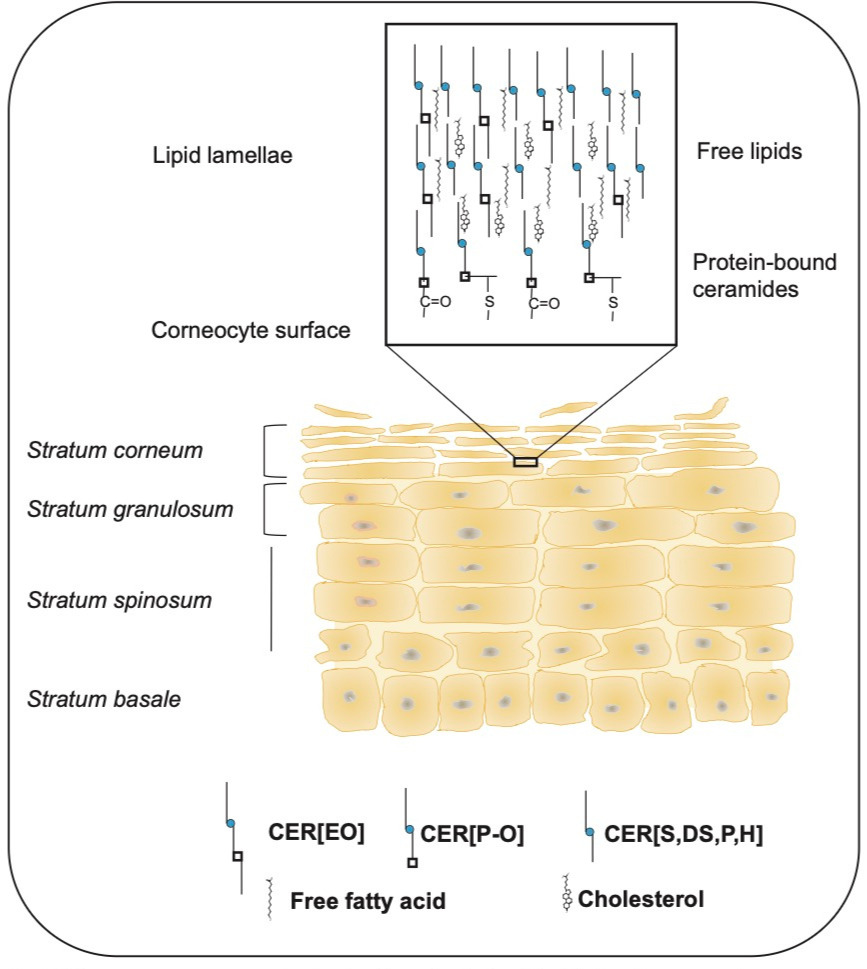
Figure 1. Organization of the stratum corneum showing corneocytes, lipid lamellae, free lipids and protein-bound ceramides
Source: Berdyshev E. Skin Lipid Barrier: Structure, Function and Metabolism. Allergy Asthma & Immunology Research. 2024;16(5):445–461.
What Are Ceramides?
Ceramides are a family of sphingolipids naturally found in the outermost layer of the skin, known as the stratum corneum.
They represent one of the dominant lipid classes within the skin barrier and play a critical role in maintaining its structure and functionality.
The skin barrier is often described using the "brick-and-mortar" model:
- Corneocytes act as the bricks.
- Intercellular lipids act as the mortar.
Ceramides are key components of this lipid matrix.
Without sufficient ceramides, the skin becomes more vulnerable to dehydration, environmental aggressors and irritation.
Why Are Ceramides Important?
The primary role of ceramides is to support the skin barrier.
Benefits associated with healthy ceramide levels include:
- Improved skin hydration
- Reduced water loss
- Enhanced barrier function
- Better protection against environmental stressors
- Increased skin comfort
- Improved resilience of sensitive skin
Ceramides also contribute to the formation of highly organized lipid lamellae, specialized structures that help prevent water loss while limiting the penetration of allergens, pollutants and microorganisms.
The Relationship Between Ceramides and TEWL
One of the most important concepts in skin barrier science is transepidermal water loss (TEWL).
TEWL refers to the passive evaporation of water through the skin.
When ceramide levels decrease:
- Skin hydration decreases
- Barrier function becomes compromised
- Sensitivity may increase
- Visible dryness becomes more common
For this reason, ceramides are frequently included in formulations designed for dry, sensitive and compromised skin.
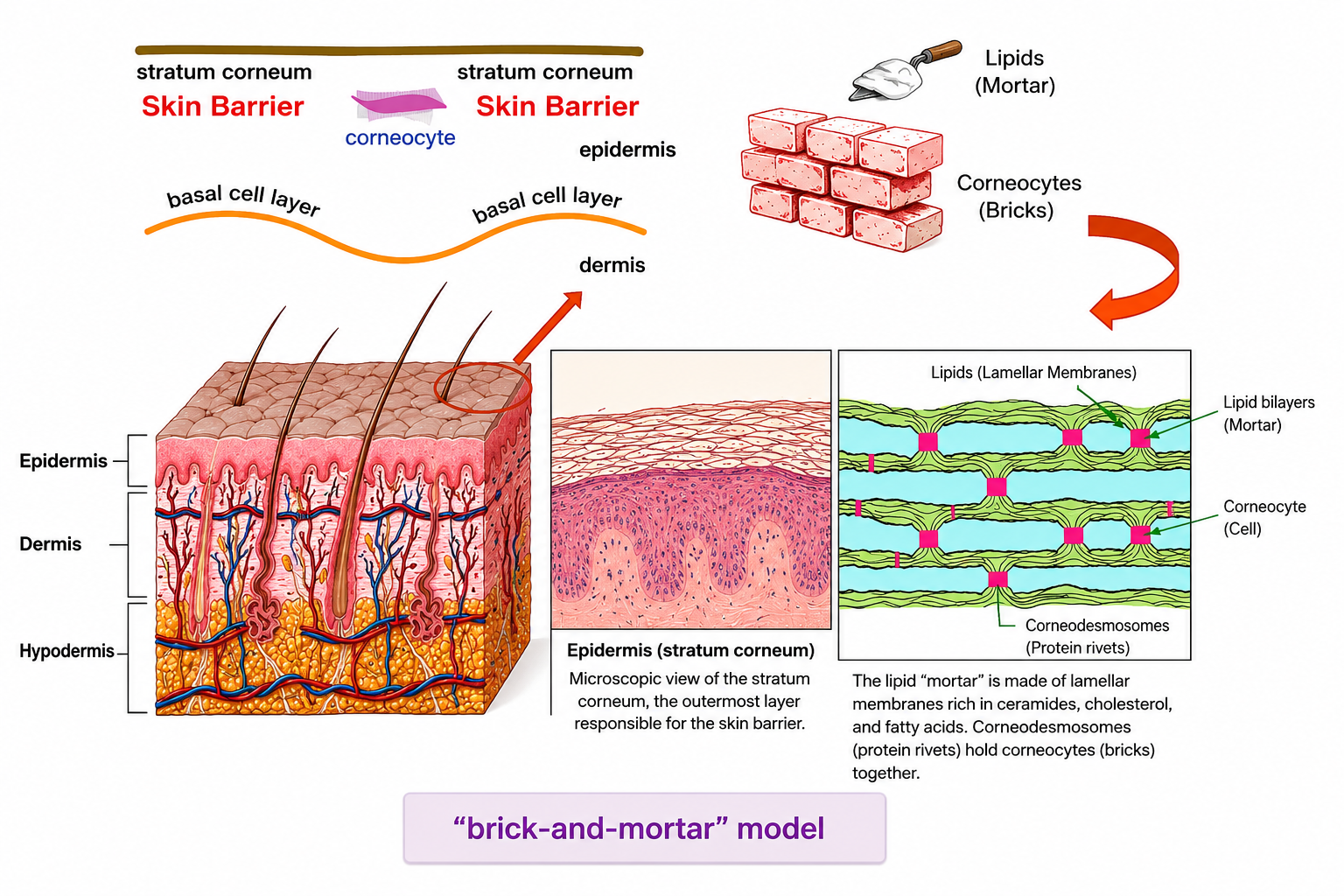
Figure 2. The "brick-and-mortar" model illustrating how corneocytes (bricks) and intercellular lipids (mortar) work together to maintain skin barrier function and reduce transepidermal water loss.
Adapted from Kahraman E., Kaykın M., Bektay H.S., Güngör S. Recent Advances on Topical Application of Ceramides to Restore Barrier Function of Skin. Cosmetics, 2019.
Ceramides Are Not Working Alone
Although ceramides receive most of the attention, they are only one part of a highly organized lipid system.
The stratum corneum lipid matrix is primarily composed of:
- Ceramides
- Cholesterol
- Free fatty acids
These lipids work together to maintain epidermal homeostasis and barrier integrity.
An imbalance in this system may contribute to barrier dysfunction and increased skin sensitivity.
The Different Types of Ceramides
Several ceramide subclasses naturally occur in human skin.
Among the most commonly discussed are:
Ceramide NP
One of the most widely used ceramides in cosmetic formulations.
Supports hydration and skin barrier maintenance.
Ceramide AP
Contributes to lipid organization and barrier cohesion.
Ceramide EOP
Plays an important structural role within the lipid lamellae.
Ceramide EOS
Involved in maintaining long-term barrier stability.
Ceramide NG
Naturally present in healthy skin and frequently used in multi-ceramide systems.
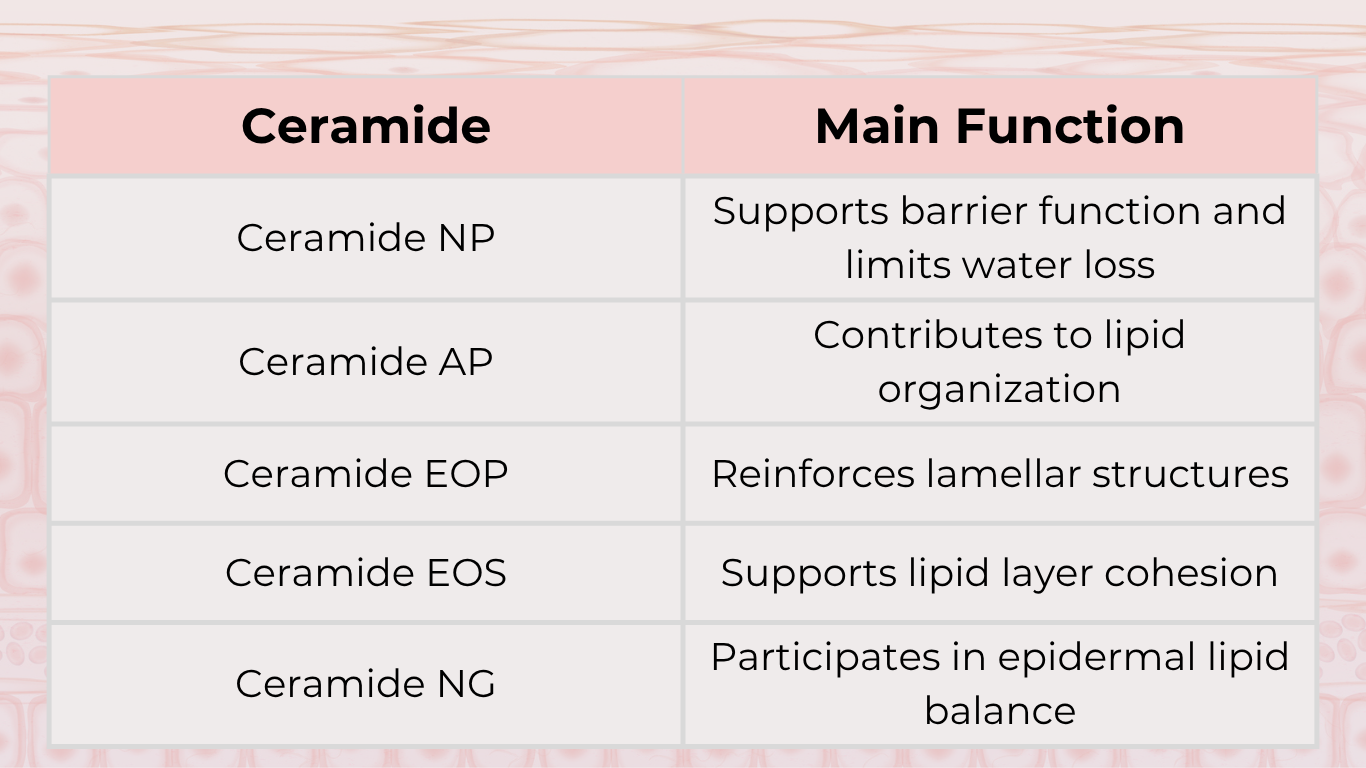
Figure 3. Overview of common ceramide subclasses found in cosmetic formulations and their contribution to skin barrier organization and function.
Why Are Ceramides Difficult to Formulate?
Despite their popularity, ceramides remain challenging ingredients for cosmetic formulators.
Several factors contribute to this complexity:
Poor Water Solubility
Ceramides are highly lipophilic molecules.
High Molecular Weight
Their relatively large molecular structure can limit delivery efficiency.
Stability Challenges
Certain ceramide systems require specialized processing and stabilization techniques.
Dispersion Difficulties
Uniform distribution within formulations may be difficult without dedicated carrier systems.
Because of these challenges, modern formulations increasingly rely on:
- Liposomes
- Encapsulation systems
- Cyclodextrins
- Biomimetic lipid complexes
- Pre-dispersed ceramide technologies
Ceramides and Sensitive Skin
Barrier dysfunction is closely associated with several skin concerns.
Reduced ceramide levels have been observed in conditions involving impaired barrier function, including:
- Dry skin
- Sensitive skin
- Atopic-prone skin
- Irritated skin
As a result, ceramides have become key ingredients in barrier repair formulations designed to support skin recovery and comfort.
Natural, Synthetic and Fermentation-Derived Ceramides
The origin of ceramides has become increasingly important.
Today, formulators may choose between:
Synthetic Ceramides
Historically the most common option.
Plant-Derived Ceramides
Popular in natural and clean beauty formulations.
Fermentation-Derived Ceramides
A rapidly growing category offering:
- Vegan origin
- Consistent quality
- Sustainable production
- Biomimetic properties
Future Trends in Ceramide Technology
Several trends are driving innovation:
- Multi-ceramide complexes
- Biomimetic lipid systems
- Fermentation-derived ceramides
- Barrier repair formulations
- Microbiome-friendly skincare
- Scalp barrier technologies
As skin barrier health continues to gain importance, ceramides are expected to remain among the most valuable ingredients in cosmetic science.
Conclusion
Ceramides are fundamental components of the skin barrier. Their ability to support hydration, reduce transepidermal water loss and maintain barrier integrity has made them essential ingredients in modern cosmetic formulations.
Whether used in skincare, dermocosmetics or hair care, ceramides continue to play a central role in the development of products focused on skin health and barrier protection.
Sources
Kahraman E., Kaykın M., Bektay H.Ş., Güngör S. Recent Advances on Topical Application of Ceramides to Restore Barrier Function of Skin. Cosmetics, 2019.
Berdyshev E. Skin Lipid Barrier: Structure, Function and Metabolism. Allergy Asthma & Immunology Research, 2024.
Categories
Examples of Raw Materials Used in Cosmetics

Viablife CeraMix Plus
A water-dispersible biomimetic multi-ceramide complex designed to support skin barrier function and improve skin hydration.
INCI: Ceramide NP, Ceramide AP, Ceramide EOP, Phytosphingosine, Polyglyceryl-10 Stearate, Cyclodextrin, Algin

ViableCare Ceramide 50
High-content Ceramide NP complex designed to improve skin hydration, support the skin barrier and enhance skin elasticity.
INCI: Ceramide NP, Hydrogenated Lecithin, Sucrose Stearate, Polyglyceryl-10 Stearate
Related Articles

Film-Forming Ingredients in Cosmetics: Understanding the Instant Tightening Effect
Film-forming ingredients are widely used in cosmetic formulations to create smoothing or tightening effects on the skin surface. This article explores how these polymers work, the differences between synthetic and naturally derived film formers, and why ingredients such as pullulan are increasingly used in modern skincare formulations.

Animal, Mimetic or Biotech Collagen: Which One Is Really Leading?
Collagen is one of the most iconic ingredients in skincare , yet its sourcing and relevance are increasingly debated. Between animal-derived collagen, plant-based mimetic alternatives, and biotech human-like collagen, this article explores what truly differentiates performance from positioning.
What Are Ceramides? A Complete Guide to Skin Barrier Repair and Hydration
Discover what ceramides are, how they support the skin barrier, reduce transepidermal water loss (TEWL), and why they have become essential ingredients in modern skincare formulations.